
Most orthodontic treatment takes somewhere between twelve and thirty months, though the exact figure depends heavily on how crowded or misaligned the teeth are to begin with, which appliance is used, and how consistently the wearer follows instructions. A minor bite correction with clear aligners might wrap up in under a year, while a complex …
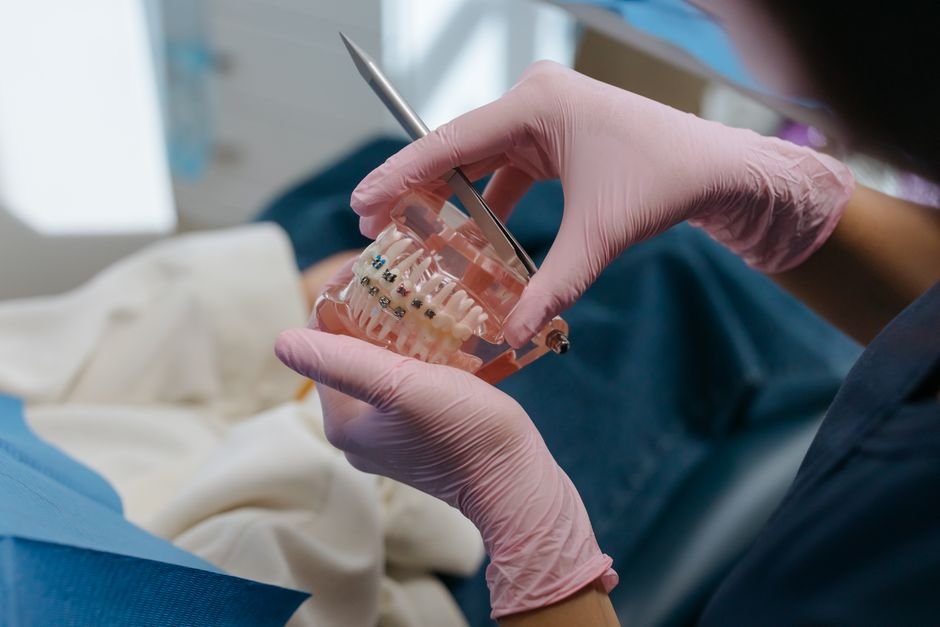

Most orthodontic treatment takes somewhere between twelve and thirty months, though the exact figure depends heavily on how crowded or misaligned the teeth are to begin with, which appliance is used, and how consistently the wearer follows instructions. A minor bite correction with clear aligners might wrap up in under a year, while a complex case involving jaw discrepancies, missing teeth, or significant crowding can take closer to two and a half years. There is no single universal number, because orthodontics is not a fixed procedure with a fixed clock — it is a biological process that moves at the pace the body allows.
Key takeaways
- Average orthodontic treatment lasts between twelve and thirty months, depending on case complexity.
- Tooth movement is limited by biological bone remodelling, not by how fast an appliance can be tightened.
- Wearing aligners or elastics exactly as instructed has a major effect on whether treatment finishes on time.
- Retention after active treatment is ongoing and directly protects the result achieved.
- Delays are common and usually caused by missed appointments, poor compliance, or unexpected biological response.
What Actually Determines Treatment Length?
Treatment duration is shaped by a combination of factors that are assessed before any appliance is fitted. The degree of crowding or spacing, the position of the jaws relative to each other, the health of the supporting gum and bone tissue, and whether any teeth need to be extracted all influence how long the process will take. A case involving only mild crowding of the front teeth is mechanically simpler than one involving a crossbite, an open bite, or teeth that need to be rotated and tipped into a new position.
Age also plays a role, though it is often overstated. Younger patients tend to have more responsive bone remodelling, which can make movement slightly faster, but adult teeth can be moved just as effectively — it simply may take a little longer because bone turnover slows gradually with age. The number of teeth that need to move, and how far each one has to travel, is usually a more accurate predictor of total treatment time than age alone.
What Is the Typical Timeline for Different Treatment Types?
Traditional fixed braces are generally worn for eighteen months to two and a half years for moderate to complex cases, though very simple corrections can finish sooner. Clear aligner systems often achieve mild to moderate corrections in twelve to eighteen months, and some very minor cosmetic alignment cases can be completed in as little as three to six months. Cases that require jaw growth modification in younger patients, or combined surgical-orthodontic treatment in adults with significant skeletal discrepancies, typically run longer, sometimes extending beyond two years when growth phases or surgical healing are factored in.
These figures are averages rather than guarantees. Two people with seemingly similar crowding can finish months apart because their bone density, ligament response, and daily compliance differ. A treatment plan given at the first consultation is always a professional estimate based on the visible starting position, refined as the teeth actually respond to the applied forces over the following months.
Why Do Some Cases Take Much Longer Than Others?
Complex cases usually involve more than one problem happening at once. A patient might have crowding in both arches, a bite that closes incorrectly, and one or two teeth that are rotated almost ninety degrees from their intended position. Each of these issues requires a different type of force, and they often cannot all be corrected simultaneously without compromising the others, so treatment proceeds in stages. Extractions, when needed to create space, add healing time before major movement can begin in that area.
Root length and shape also affect pace. Teeth with naturally shorter or curved roots move differently under force than those with longer, straighter roots, and some movements — particularly rotations and bodily movements of a whole tooth rather than simple tipping — inherently require more time to stabilise in bone. None of this reflects anything wrong with the patient; it is simply the biomechanics of that particular set of teeth.
Does Compliance Really Change the Outcome?
Yes, and often more than people expect. Removable aligners depend entirely on being worn for the recommended twenty to twenty-two hours a day; falling short of that consistently slows tooth movement and can cause the aligner to stop fitting properly, requiring a refinement set and extra weeks or months of treatment. Fixed braces are less dependent on daily choices, but elastics, if prescribed, still need to be worn as directed for the bite correction to progress on schedule.
Missed or delayed appointments have a similar effect. Orthodontic treatment is monitored and adjusted at intervals because teeth respond individually to force, and a plan that is not reviewed on schedule cannot be corrected in time if movement is happening too slowly, too quickly, or in an unintended direction. Consistent attendance keeps the treatment plan accurate rather than working from outdated information.
What Happens During Each Stage of Treatment?
Most orthodontic treatment moves through recognisable stages, even though the exact appliance differs. The first stage typically focuses on levelling and aligning the teeth within each arch, resolving crowding or spacing before anything else is addressed. Once the teeth sit more evenly, attention shifts to correcting the bite relationship between the upper and lower arches, which is often the stage where elastics or specific aligner attachments come into play.
The final stage is about detailing and finishing — fine-tuning individual tooth positions, closing any remaining small gaps, and checking that the bite meets correctly when the jaws close. This stage can feel slow because changes are subtle, but it is what determines whether the final result is stable and comfortable long after the appliance comes off. Rushing this phase tends to produce results that relapse more easily.
Can Anything Genuinely Speed Up Treatment?
Wearing aligners or elastics exactly as instructed is the single most reliable way to keep treatment on its predicted timeline, since inconsistent wear is the most common cause of delay. Attending every scheduled appointment also matters, because adjustments are timed to match how the teeth are expected to have moved, and a missed visit means a missed opportunity to correct course early.
Some clinics offer supplementary techniques intended to encourage bone remodelling, such as light vibration devices or minor procedures that stimulate the bone around the roots. Evidence for how much these genuinely shorten overall treatment time is mixed, and they are not a substitute for good compliance and a well-planned appliance. The most dependable way to avoid adding time to a treatment plan is simply following it as designed from the outset.
What Commonly Causes Treatment Delays?
Poor oral hygiene during treatment is a frequent and avoidable cause of delay. Plaque build-up around brackets or under aligners can inflame the gums, and inflamed tissue does not respond predictably to orthodontic force, sometimes slowing movement or requiring a pause in treatment while gum health is brought back under control. Tooth decay discovered mid-treatment can also halt progress in that area until it is treated.
Broken brackets, lost aligners, or damaged wires each set the timeline back, since the appliance cannot do its job while it is not intact or not being worn. Unanticipated biological factors, such as teeth that are more resistant to movement than expected or roots that behave unusually under force, can also extend a plan beyond its original estimate. These are adjusted for as they arise rather than being predictable at the outset.
What Happens After Active Treatment Ends?
Removing braces or finishing the last aligner tray is not the true end point of orthodontic treatment — it marks the start of the retention phase. Teeth remain in a healing socket surrounded by ligament fibres that take time to reorganise around the new position, and without something holding them in place, they tend to drift back toward their original alignment. This is why a retainer is fitted immediately after active treatment finishes.
Retention typically starts with near-full-time wear for several months before tapering down to night-time wear only. Many orthodontists recommend some form of long-term night-time retention indefinitely, since teeth can continue to shift subtly throughout life regardless of whether orthodontic treatment ever took place. Skipping retainer wear is one of the most common reasons a well-finished result gradually loses its alignment over the following years.
Frequently Asked Questions
What is the shortest realistic time for orthodontic treatment?
Very minor cosmetic corrections, such as straightening a small amount of crowding in the front teeth, can sometimes be completed in three to six months using clear aligners. Cases this simple are the exception rather than the rule, and most people should expect a timeline closer to a year or more.
Does age affect how quickly teeth move during treatment?
Age has a smaller effect than most people assume. Bone remodels a little more slowly as people get older, which can add some time to a plan, but adult teeth still move effectively and predictably. The complexity of the misalignment is generally a stronger factor than age in determining overall duration.
Can treatment finish early if the teeth look straight?
Teeth can appear straight before the bite and root positions have fully settled into their planned final position, so finishing early based on appearance alone risks an unstable result. The finishing stage adjusts details that are not always visible, and ending treatment before it is complete increases the chance of relapse.
Why did my treatment take longer than the original estimate?
Initial timelines are professional estimates based on the starting position of the teeth, and they are refined as treatment progresses. Missed appointments, inconsistent aligner wear, gum inflammation, or teeth responding more slowly than expected can all extend a plan beyond its original estimate without indicating anything has gone wrong.
How long do I need to wear a retainer after treatment?
Most people wear a retainer close to full-time for the first few months after active treatment, then shift to night-time wear only. Many practitioners recommend continuing some level of night-time retention long-term, since teeth can shift gradually throughout life even without any history of orthodontic treatment.
Disclaimer: This article is for informational purposes only and does not constitute medical or dental advice. Always consult a qualified dental professional before making any decisions about your oral health or treatment options.