
Aligner attachments are small, tooth-coloured bumps of composite resin bonded to the surface of certain teeth during clear aligner treatment. They give the smooth plastic aligner something to grip, acting like handles that help the aligner push, rotate or tilt a tooth in a specific direction. Without them, some tooth movements would be slow, unpredictable …

Aligner attachments are small, tooth-coloured bumps of composite resin bonded to the surface of certain teeth during clear aligner treatment. They give the smooth plastic aligner something to grip, acting like handles that help the aligner push, rotate or tilt a tooth in a specific direction. Without them, some tooth movements would be slow, unpredictable or impossible to achieve with aligners alone.
Key takeaways
- Attachments are small composite shapes bonded to teeth to help aligners apply precise forces.
- They are especially useful for rotations, raising or lowering teeth and moving roots.
- Placement is quick and painless, with no drilling or anaesthetic needed.
- Attachments are removed and polished away at the end of treatment without damaging enamel.
- Good brushing around attachments helps prevent staining and plaque build-up.
What Exactly Are Aligner Attachments?
Attachments are tiny raised shapes, usually only a few millimetres across, made from the same kind of tooth-coloured composite material used for fillings and bonding. They are fixed to the front or sometimes the back surface of selected teeth and matched as closely as possible to the natural tooth shade. Because they are small and colour-matched, most people find them barely noticeable in everyday conversation, especially once the clear aligner is in place over the top.
Each attachment has a carefully planned shape. Some are rectangular, some are bevelled like a ramp, and others are more rounded or oval. The shape, size, angle and position are all chosen during the digital planning stage based on the movement each tooth needs to make. Not every patient needs attachments, and those who do may only have them on a handful of teeth. The number and design depend entirely on the complexity of the individual treatment plan.
Why Do Clear Aligners Need Attachments?
Clear aligners work by applying gentle, controlled pressure to teeth, with each new set slightly different from the last. However, teeth are naturally smooth and rounded, which can make it difficult for a plastic tray to get a firm hold. When an aligner tries to rotate a rounded tooth, such as a canine or premolar, it may simply slip around the surface rather than turning it. Attachments solve this by creating a defined edge the aligner can push against.
Attachments also improve how well aligners stay seated. A tray that sits snugly and evenly delivers forces exactly as planned, whereas a loose tray may lift away from teeth and lose effectiveness. By increasing grip, attachments help each aligner do its job during the time it is worn. This leads to more predictable movement and can reduce the chance of needing extra aligners later in treatment to correct teeth that have not tracked as expected.
Which Tooth Movements Benefit Most?
Some movements are relatively straightforward for aligners, such as gently tipping a front tooth forwards or backwards. Others are more challenging and are where attachments make the greatest difference. Rotations, particularly of rounded teeth, often require attachments to provide the necessary leverage. Extrusion, which means bringing a tooth further down or up out of the gum, is another movement that is difficult without something for the aligner to pull against.
Moving the root of a tooth, rather than just tilting the crown, also benefits from attachments. This type of movement, sometimes called bodily movement or root control, is important for closing gaps neatly and keeping teeth upright. Attachments can also help anchor certain teeth so they stay still while neighbouring teeth move, which is useful when closing spaces or correcting bite problems. In more complex cases, attachments may be combined with small elastics connected to hooks or buttons.
How Are Attachments Put On?
Attachments are usually placed at the start of treatment, often when the first aligners are fitted. The process is quick and comfortable. The teeth are cleaned and gently prepared with a mild solution that roughens the surface microscopically, helping the composite bond. A special template tray, shaped like an aligner but with small hollow pockets, is filled with composite and pressed over the teeth. The material is then hardened with a blue curing light.
Once the template is removed, the attachments remain in exactly the planned positions. Any excess material is tidied away, and the first aligners are checked for fit. There is no drilling, no anaesthetic and no permanent change to the tooth structure. Most people feel little more than the template pressing on their teeth. Your teeth may feel slightly rough to your tongue at first, but this sensation usually fades within a few days as you become used to them.
Do Attachments Hurt or Feel Strange?
Placing attachments is not painful, but some people notice their aligners feel tighter once attachments are in. This is because the trays now grip more firmly, which is exactly the intention. It is common to experience mild pressure or tenderness for a day or two after starting each new set of aligners, and attachments can make this sensation slightly more noticeable. Over-the-counter pain relief, taken as directed, and soft foods can help during the first few days.
Your lips and cheeks may brush against the attachments when aligners are out, such as during meals. Some people find the edges feel sharp initially. If an attachment feels rough enough to irritate your mouth, a small amount of orthodontic wax can help, and your dentist or orthodontist can smooth any uneven edges. Removing aligners may also take a little more effort with attachments, so using your fingertips to ease the tray off from the back teeth first is usually the easiest approach.
How Should You Look After Attachments?
Attachments create small ledges where plaque and food can collect, so careful cleaning is important. Brush thoroughly around each attachment twice a day, angling the bristles to reach above, below and around the edges. Cleaning between teeth with floss or interdental brushes remains essential. Always brush your teeth before putting aligners back in after eating, as trapping food or sugary drinks against attachments under a tray can increase the risk of decay and staining.
Composite material can pick up stains from coffee, tea, red wine, curries and smoking, which may make attachments more visible over time. Removing aligners before eating or drinking anything other than plain water and rinsing or brushing afterwards helps keep them looking discreet. Avoid biting very hard foods with the teeth that have attachments, as this can occasionally dislodge them. Keeping up regular dental check-ups and hygiene appointments helps keep teeth and gums healthy throughout treatment.
What Happens If an Attachment Falls Off?
Attachments are designed to last for the length of treatment, but occasionally one may come loose, often from biting on something hard or from repeated removal of aligners. If this happens, keep wearing your aligners as usual unless your clinician advises otherwise, and contact them to let them know. Losing an attachment does not usually cause harm, but the affected tooth may not move as effectively, so it is best to have it replaced promptly.
Replacing an attachment is quick and uses the same template technique as the original placement. Your clinician may keep the template from the start of treatment for exactly this purpose. Do not try to glue anything back onto the tooth yourself. If you notice an aligner no longer fits as snugly over one area, or you see a gap between the tray and a tooth, mention it at your next contact, as this may indicate a missing attachment or a tooth that is not tracking as planned.
How Are Attachments Removed at the End of Treatment?
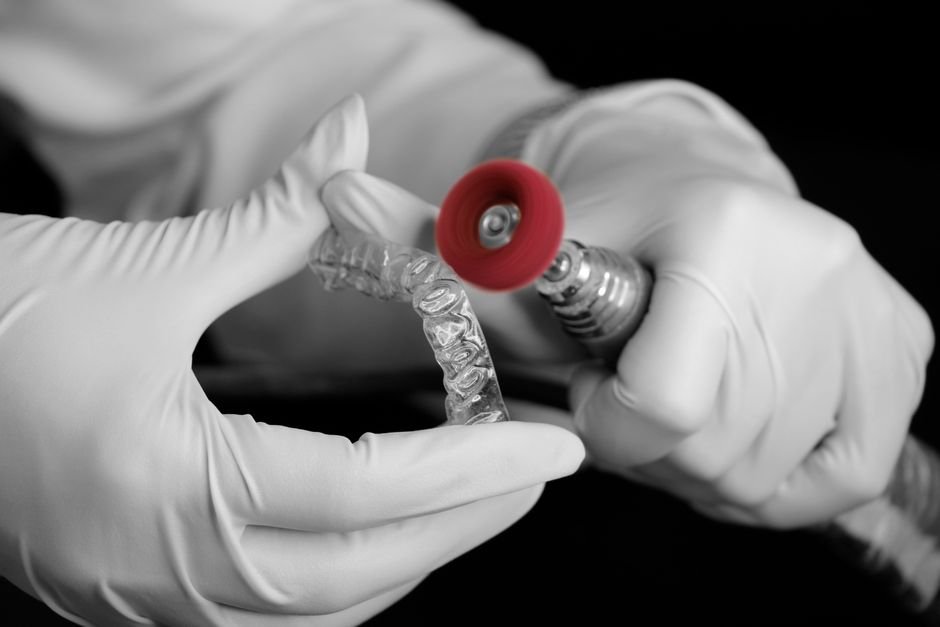
When the teeth have reached their final positions, the attachments are removed. Your dentist or orthodontist uses a fine polishing instrument to carefully take the composite away until the tooth surface is smooth again. The process is usually quick and painless, though you may feel some vibration. Because attachments are bonded to the surface rather than set into the tooth, removal does not damage the underlying enamel when carried out by a trained clinician.
After removal, your teeth are polished, and you will typically be fitted with retainers to hold the new positions. Retainers are an essential part of treatment, as teeth naturally tend to drift back towards where they started, especially in the first months. Many people are pleasantly surprised by how smooth their teeth feel once the attachments are gone. Following your retainer instructions carefully helps protect the results that the attachments and aligners worked together to achieve.
Frequently Asked Questions
Are aligner attachments noticeable?
Aligner attachments are small and made from tooth-coloured composite matched to your natural shade, so they are usually hard to notice in everyday conversation, particularly when clear aligners are being worn over them.
Does getting aligner attachments hurt?
Placing aligner attachments does not hurt. No drilling or anaesthetic is needed. Some people notice that aligners feel tighter afterwards, which can cause mild pressure for a day or two with each new set of aligners.
Do aligner attachments damage teeth?
Aligner attachments do not damage teeth when placed and removed by a trained clinician. They are bonded to the tooth surface and polished away at the end of treatment, leaving the enamel smooth.
What should I do if an aligner attachment falls off?
If an aligner attachment falls off, continue wearing your aligners unless told otherwise and contact your dentist or orthodontist. They can replace it quickly using the original template so the tooth continues moving as planned.
Does everyone having clear aligner treatment need attachments?
Not everyone needs attachments. They are used when specific tooth movements, such as rotations, raising teeth or root movement, need extra grip. Simple cases may need few or no attachments at all.
Disclaimer: This article is for informational purposes only and does not constitute medical or dental advice. Always consult a qualified dental professional before making any decisions about your oral health or treatment options.