
Choosing between a dental bridge and an implant to replace a missing tooth comes down to the health of the neighbouring teeth, the condition of the jawbone, how long you want the result to last, and your budget and timeline. An implant replaces the tooth root and stands alone without affecting other teeth, while a …


Choosing between a dental bridge and an implant to replace a missing tooth comes down to the health of the neighbouring teeth, the condition of the jawbone, how long you want the result to last, and your budget and timeline. An implant replaces the tooth root and stands alone without affecting other teeth, while a bridge uses the teeth on either side of the gap for support and can usually be completed more quickly.
Key takeaways
- An implant is a standalone titanium or ceramic post placed in the jaw, topped with a crown.
- A bridge anchors a replacement tooth to crowns on the neighbouring teeth.
- Implants preserve jawbone and leave adjacent teeth untouched; bridges require those teeth to be reshaped.
- Bridges are usually faster and lower in upfront cost; implants often last longer and are easier to clean around.
- Bone volume, gum health, general health and habits such as smoking all influence which option is suitable.
How does a dental implant work?
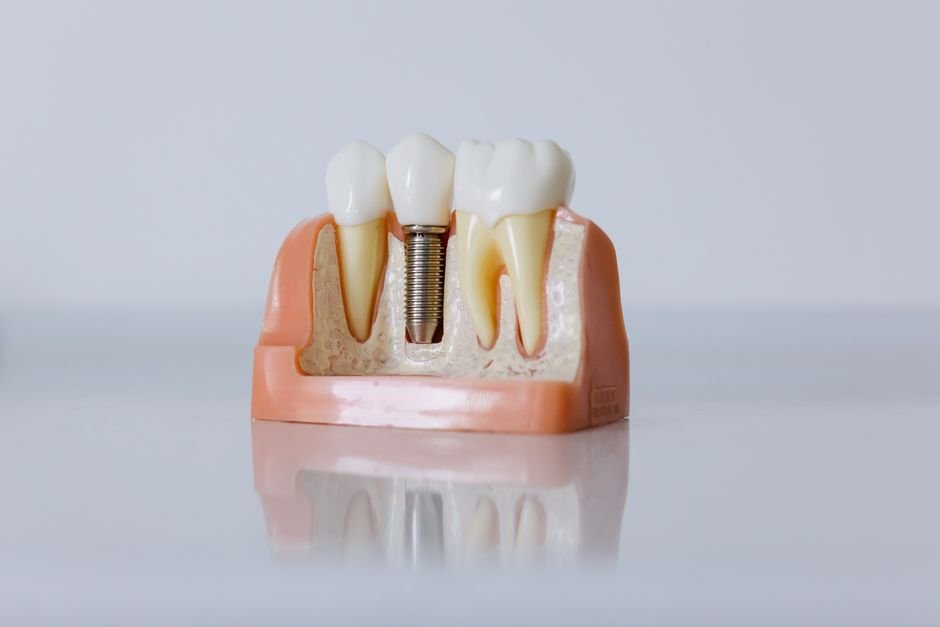
An implant is a small screw-shaped post, usually made of titanium, that is placed into the jawbone where the natural tooth root used to be. Over a period of weeks to months, bone grows onto the surface of the post in a process called osseointegration, locking it firmly in place. Once this has happened, a connector and a custom crown are attached on top to restore the visible tooth.
Because the implant replaces the root, it transmits chewing forces into the bone in a way that resembles a natural tooth. This helps keep the bone stimulated and reduces the shrinkage that normally follows tooth loss. The neighbouring teeth are not involved at all, so they keep their full natural structure.
How does a dental bridge work?
A traditional bridge replaces a missing tooth by joining an artificial tooth, called a pontic, to crowns that fit over the teeth on each side of the gap. The supporting teeth are reshaped to make room for these crowns, and the whole unit is cemented into place as one piece. The pontic rests on top of the gum where the missing tooth was.
There are variations. A resin-bonded bridge uses thin wings bonded to the backs of the adjacent teeth rather than full crowns, which preserves more tooth structure but is generally suited to lighter biting areas such as front teeth. A cantilever bridge is supported on only one side and is used in specific situations. Your dentist will advise which design fits your gap and bite.
What is the effect on the neighbouring teeth?
This is often the deciding factor. A conventional bridge requires the teeth on either side of the gap to be filed down so crowns can be fitted over them. If those teeth are already heavily filled, cracked or crowned, this may be a sensible use of them. If they are healthy and untouched, many people are reluctant to remove sound enamel that cannot be replaced.
An implant leaves the adjacent teeth completely alone. This matters over a lifetime, because every time a tooth is drilled and crowned there is a small ongoing risk of nerve problems or future fracture. Preserving natural teeth wherever possible is a core principle of modern dentistry, and this often tips the balance towards an implant when the neighbouring teeth are sound.
Which option lasts longer?
Both can last many years with good care, but they tend to fail in different ways. Implants have high long-term success rates, and the main risks are gum and bone problems around the implant if cleaning is poor, or mechanical issues with the crown or connector, which can usually be repaired. The implant post itself often lasts decades.
Bridges are also durable, but the whole unit depends on the supporting teeth. If decay develops under one of the crowns or a supporting tooth fractures, the entire bridge may need replacing, and the problem is sometimes only discovered once it is advanced. On average, a well-made implant tends to have a longer service life than a bridge, though individual results vary widely.
How do cost and treatment time compare?
A bridge usually has a lower upfront cost and is completed in a matter of weeks, typically over two or three appointments. There is no surgery and no long healing phase, which appeals to people who want the gap closed quickly or who prefer to avoid a surgical procedure.
An implant generally costs more at the outset and takes longer overall, often several months from placement to final crown, and more if bone grafting is needed first. However, because an implant does not put the neighbouring teeth at risk and often lasts longer, the lifetime cost can work out similar or lower once you account for potential future replacement of a bridge. Your dentist can outline the likely costs for your specific case.
What role does the jawbone play?
An implant needs enough healthy bone to hold it securely. After a tooth is lost, the bone in that area gradually shrinks, and if a long time has passed there may not be enough left. In that situation a bone graft can rebuild the site, adding time and cost, or a bridge may become the more practical choice.
A bridge does not rely on the bone at the gap, so it can be an option where bone volume is limited. However, because a bridge does not stimulate the bone under the pontic, that bone continues to shrink slowly over the years. This can eventually create a visible gap under the false tooth that traps food and affects appearance, particularly at the front of the mouth.
How do the two options compare for cleaning and maintenance?
An implant crown is cleaned much like a natural tooth, with brushing and cleaning between the teeth on both sides. Because it stands separately, floss or an interdental brush passes cleanly around it. Keeping the gum around an implant healthy is essential, as implants can develop a gum-disease-like condition if plaque is allowed to build up.
A bridge is joined across the gap, so you cannot pass floss between the teeth in the normal way. Instead you thread floss underneath the pontic using a floss threader, or use a specially shaped interdental brush, to clean the area where the false tooth meets the gum. This takes a little more effort and consistency, and neglecting it is a common reason bridges fail early.
Which factors should guide your decision?
Consider the condition of the neighbouring teeth first: if they are healthy, an implant avoids damaging them; if they already need crowns, a bridge may make good use of them. Then weigh bone volume, your general health and whether you smoke, as these strongly affect implant success. Finally, think about your priorities around cost, treatment time and how much maintenance you are willing to do.
There is rarely a single right answer. The best approach is a full assessment with your dentist, including X-rays and sometimes a three-dimensional scan, so the state of the bone and surrounding teeth is clear. They can then talk you through how each option would look and function in your particular mouth, and what the realistic long-term outlook is for each.
Frequently Asked Questions
Is an implant always better than a bridge?
Not always. An implant is often preferred when the neighbouring teeth are healthy and there is enough bone, because it preserves those teeth and the bone. A bridge can be the better choice when the adjacent teeth already need crowns, when bone is limited, or when a faster, non-surgical solution is needed.
Can I have an implant years after losing a tooth?
Often yes, but the bone in the area shrinks over time, so a bone graft may be needed to rebuild enough support. A scan will show how much bone is present. If grafting is not suitable, a bridge or a removable option may be recommended instead.
Does getting a bridge damage healthy teeth?
A traditional bridge requires the supporting teeth to be reshaped for crowns, which permanently removes enamel. If those teeth are already filled or crowned this matters less. A resin-bonded bridge removes far less tooth structure but is generally limited to lower-force areas such as front teeth.
How do I clean under a bridge?
Use a floss threader to pass floss beneath the false tooth, or a specially shaped interdental brush designed for bridges. Cleaning this area daily is essential, because plaque trapped under the pontic can cause decay in the supporting teeth or gum inflammation.
Will smoking affect my choice?
Smoking reduces blood flow to the gums and bone and is linked to higher rates of implant complications and slower healing. It also raises the risk of gum disease around both implants and bridge-supporting teeth. Your dentist may advise stopping before implant treatment to improve the chance of success.
Disclaimer: This article is for informational purposes only and does not constitute medical or dental advice. Always consult a qualified dental professional before making any decisions about your oral health or treatment options.