
Clear aligners are a series of custom-made, transparent plastic trays that gradually shift teeth into a straighter position, offering a more discreet alternative to metal braces for many people. Whether they suit you depends on the type and severity of your bite issue, your daily habits and how consistently you can wear them, since they …

Clear aligners are a series of custom-made, transparent plastic trays that gradually shift teeth into a straighter position, offering a more discreet alternative to metal braces for many people. Whether they suit you depends on the type and severity of your bite issue, your daily habits and how consistently you can wear them, since they rely heavily on discipline to work as intended.
Key takeaways
- Clear aligners use a series of custom trays to gradually move teeth, changed roughly every one to two weeks.
- They suit mild to moderate crowding, spacing and some bite issues, but severe cases may still need traditional braces.
- Success depends heavily on wearing the trays for the recommended number of hours each day.
- They are removable for eating and cleaning, which many people find more convenient than fixed braces.
- A retainer is essential after treatment to keep teeth from gradually shifting back.
What Are Clear Aligners and How Do They Straighten Teeth?
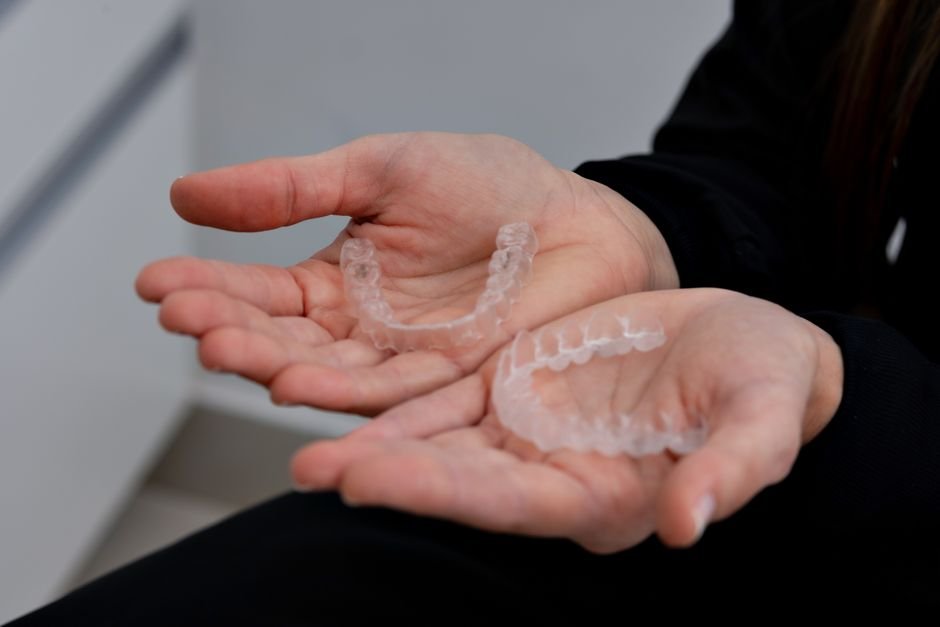
Clear aligners are thin, custom-fitted trays made from a flexible, transparent plastic that fit snugly over the teeth. Each tray in a series is slightly different from the last, applying gentle, targeted pressure that encourages teeth to move a small amount at a time. Patients typically wear each set for one to two weeks before moving on to the next in the sequence.
The overall movement is planned in advance using digital scans of the mouth, which allow the dentist to map out a precise path from the current position of the teeth to the desired final result. This means the whole course of treatment can be visualised before it even begins, giving both dentist and patient a clear idea of what to expect at each stage along the way.
How Are Clear Aligners Different From Traditional Braces?
Traditional braces use brackets bonded to each tooth, connected by a wire that the dentist tightens periodically to guide teeth into position. Clear aligners achieve movement through a sequence of separate trays rather than a single fixed appliance, and they can be taken out for eating, brushing and special occasions, which many people find far more convenient day to day.
Because aligners are removable, they also make cleaning teeth considerably easier, since there are no brackets or wires to navigate around with a toothbrush or floss. On the other hand, this removability places more responsibility on the wearer, as aligners only work if they are worn consistently for the recommended hours each day, whereas fixed braces continue working regardless of the patient’s daily choices.
What Dental Issues Can Clear Aligners Treat?
Clear aligners are generally well suited to mild to moderate crowding, gaps between teeth, and certain bite irregularities such as minor overbites, underbites or crossbites. Many people seeking a straighter smile for cosmetic reasons, rather than a complex functional correction, find aligners achieve pleasing results within a reasonable timeframe.
More severe misalignments, significant bite discrepancies or cases involving major tooth rotation can be harder to correct with aligners alone and may respond better to traditional braces or a combination of approaches. A thorough examination and digital scan allow a dentist to determine whether a case falls within the range that aligners can reliably address.
What Does the Clear Aligner Treatment Process Involve?
Treatment begins with a consultation, during which the dentist examines the teeth and bite, takes digital scans or impressions, and discusses whether aligners are a realistic option. A treatment plan is then generated showing the projected movement of each tooth, and a full series of aligner trays is manufactured based on this plan.
The patient wears each tray for the prescribed number of hours daily, changing to the next set in the sequence at regular intervals, with periodic check-ins so the dentist can monitor progress. Small tooth-coloured attachments are sometimes bonded to certain teeth to help the trays grip and apply force more effectively for particular movements.
How Do You Care for Clear Aligners and Your Teeth During Treatment?
Aligners should be removed before eating or drinking anything other than plain water, since food particles and staining liquids can become trapped against the teeth or discolour the plastic. After meals, teeth should be brushed before the trays go back in, helping to prevent plaque and food debris from being sealed against the tooth surface for extended periods.
The trays themselves need regular cleaning with a soft toothbrush and clear, unscented soap or a designated cleaning solution, avoiding hot water which can distort the plastic. Storing aligners in their case whenever they are not being worn helps prevent loss, damage or contamination, and keeps them ready to reinsert as soon as eating or drinking is finished.
Who Might Not Be a Suitable Candidate for Clear Aligners?
People with significant bite problems, severely rotated teeth, or conditions requiring bone or jaw repositioning are often better served by traditional braces or a combined orthodontic approach. Gum disease that has not been brought under control is another factor that usually needs addressing before any orthodontic movement, aligner-based or otherwise, can safely begin.
Aligners also demand a level of commitment that not everyone can maintain, since inconsistent wear slows or derails progress and can lead to a treatment plan needing to be revised partway through. Younger children whose adult teeth are still emerging are generally not candidates either, as aligner treatment usually begins once most permanent teeth have come through.
What Are the Benefits and Limitations of Clear Aligners?
The main benefits include a virtually invisible appearance, the ability to remove the trays for eating and cleaning, and generally fewer emergency visits since there are no wires to snap or brackets to come loose. Many people also find aligners more comfortable than fixed braces, without the risk of the metal components irritating the inside of the cheeks or lips.
The main limitation is that results depend directly on discipline, since aligners only move teeth while they are actually being worn. They are also less suited to complex bite corrections, and treatment can sometimes take longer than anticipated if trays are not worn as instructed or if the case turns out to be more complicated than the initial scan suggested.
How Long Does Treatment Take and What Happens Afterwards?
Treatment length varies considerably depending on the complexity of the case, ranging from several months for minor cosmetic adjustments to well over a year for more involved corrections. Regular check-ins allow the dentist to confirm that teeth are tracking with each new tray as expected and to make adjustments to the plan if progress differs from projections.
Once the final tray has been worn, a retainer is fitted to hold teeth in their new position, since all teeth have a natural tendency to drift back towards their original placement over time. Wearing a retainer as instructed, often nightly for an extended period and then less frequently, is essential to protect and preserve the results achieved during active treatment.
How Should You Choose Between Clear Aligners and Other Options?
Choosing the right approach starts with an honest conversation with a dentist about the specific alignment issue, your daily routine and how realistic it is that you will wear the trays as consistently as required. Someone with a demanding schedule that involves frequent eating out or public speaking may weigh the discreet, removable nature of aligners very differently to someone who prefers a fit-and-forget approach.
Cost, expected treatment length and the complexity of the case are also worth discussing openly, since a straightforward cosmetic correction and a more involved bite adjustment can lead to quite different recommendations. A dentist experienced in both aligners and fixed braces can outline the realistic outcomes of each option, helping you settle on the approach best matched to your goals and lifestyle.
Frequently Asked Questions
Are clear aligners as effective as traditional braces?
For mild to moderate crowding, spacing and certain bite issues, clear aligners can be just as effective as traditional braces. More complex or severe misalignments may still respond better to fixed braces or a combined orthodontic approach.
How many hours a day do aligners need to be worn?
Most treatment plans require aligners to be worn for the majority of each day, removing them only for eating, drinking anything other than water, and cleaning the teeth. Wearing them for fewer hours than recommended can slow or disrupt progress.
Will clear aligners affect the way I speak?
Some people notice a slight change in speech during the first few days as the tongue adjusts to the presence of the trays. This typically resolves quickly as the mouth becomes accustomed to wearing them.
Can I drink coffee or tea while wearing aligners?
Hot or staining drinks should generally be avoided while aligners are in place, as they can discolour the plastic and, being hot, may also warp the trays. It is best to remove aligners before drinking anything other than plain water.
What happens if I stop wearing my retainer after treatment?
Teeth naturally tend to drift back towards their original position over time, so skipping retainer wear can allow previously corrected crowding or spacing to gradually return. Following the retainer schedule provided by the dentist helps maintain the result long term.
Disclaimer: This article is for informational purposes only and does not constitute medical or dental advice. Always consult a qualified dental professional before making any decisions about your oral health or treatment options.