
Many widely believed ideas about braces and orthodontic treatment, such as the notion that it is purely cosmetic or only suitable for children, simply do not hold up against how modern orthodontics actually works. These myths often lead people to delay treatment or dismiss it as unnecessary when it could genuinely improve both function and …

Many widely believed ideas about braces and orthodontic treatment, such as the notion that it is purely cosmetic or only suitable for children, simply do not hold up against how modern orthodontics actually works. These myths often lead people to delay treatment or dismiss it as unnecessary when it could genuinely improve both function and comfort. Understanding what is fact and what is outdated assumption helps people make better informed decisions about their own dental health.
Key takeaways
- Orthodontic treatment addresses bite function, not just tooth appearance.
- Adults make up a significant share of people undergoing orthodontic treatment.
- Modern options extend well beyond traditional metal braces.
- Treatment length depends on individual complexity, not a fixed universal timeline.
- Retainers remain necessary indefinitely to preserve results after active treatment.
Myth: Orthodontic Treatment Is Only About Appearance
While straighter teeth are certainly a visible outcome of orthodontic treatment, the underlying goal is usually much broader than cosmetics alone. Misaligned teeth and bite problems can make chewing less efficient, contribute to abnormal wear on certain teeth, and in some cases place extra strain on the jaw joint over time.
Correcting these issues can improve how comfortably a person chews and speaks, and can reduce the likelihood of certain dental problems developing later in life, such as uneven wear or difficulty cleaning crowded teeth effectively. Appearance is a meaningful part of the outcome, but it is only one part of a broader functional picture that orthodontists consider when planning treatment.
Myth: Braces Are Only for Children and Teenagers
It is true that orthodontic treatment is often introduced during childhood or adolescence, partly because growing jaws can sometimes make certain corrections more straightforward. However, this does not mean treatment becomes ineffective or inappropriate once a person reaches adulthood.
Teeth remain capable of moving through the surrounding bone at any age, provided the gums and supporting structures are healthy enough to support the process. A growing number of adults pursue orthodontic treatment, sometimes to correct issues that were never addressed earlier in life, and sometimes because their bite has shifted gradually over the years. Age alone is rarely the deciding factor in whether treatment is suitable.
Myth: All Orthodontic Treatment Involves Metal Braces
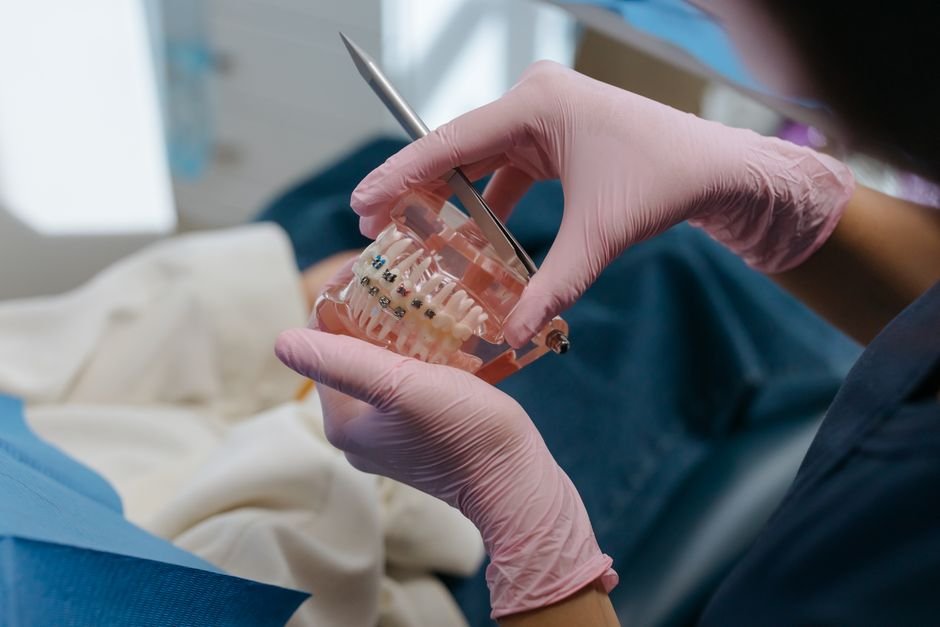
Traditional metal braces remain a common and effective option, but they are far from the only choice available today. Clear aligner systems, ceramic braces that blend more closely with natural tooth colour, and other variations all offer different combinations of appearance, comfort, and suitability depending on the specific correction needed.
The right option for any individual depends on factors such as the complexity of the case, personal preferences, and lifestyle considerations, which is why an orthodontic consultation typically includes a discussion of which approach best fits the situation. Assuming that metal braces are the only path forward can lead people to delay treatment out of concerns that may no longer apply to their specific case.
Myth: Orthodontic Treatment Always Takes Years to Complete
Treatment length varies enormously depending on the complexity of the case being addressed. Minor corrections involving only slight crowding or spacing can sometimes be resolved in a matter of months, while more complex bite issues involving significant misalignment may reasonably take a couple of years to fully correct.
Because treatment length is so individual, hearing about someone else’s multi-year experience does not necessarily reflect what your own timeline would look like. An orthodontic evaluation gives a much more accurate, personalised estimate based on the specific issues present, rather than relying on generalised assumptions about how long treatment typically takes.
Myth: Once Treatment Ends, Teeth Stay Straight Forever Without Effort
A commonly overlooked reality is that teeth have a natural tendency to shift back toward their original position after active treatment ends, a process influenced by the elastic fibres in the gum tissue that take time to fully stabilise around a tooth’s new position. This is precisely why retainers are prescribed after braces or aligners are removed.
Wearing a retainer as instructed, which often continues indefinitely in some reduced form, is what actually preserves the results achieved during treatment. Skipping this step is one of the more common reasons people notice their teeth gradually shifting again years after their orthodontic treatment was technically finished.
Myth: Orthodontic Problems Are Purely Cosmetic and Can Be Left Untreated Indefinitely
Some bite misalignments, if left unaddressed for a long time, can contribute to uneven wear on certain teeth, difficulty cleaning tightly crowded areas effectively, and in some cases discomfort in the jaw joint. Treating these issues is not simply about achieving a particular appearance, but about supporting the long term function and health of the bite as a whole.
This does not mean every minor misalignment requires treatment, since many small variations cause no functional problems at all. The point is that dismissing orthodontic concerns as purely cosmetic can sometimes mean missing an opportunity to address an issue before it develops into something more noticeable or harder to manage.
Myth: Straightening Teeth Guarantees Perfect Oral Health
While straighter, better-aligned teeth are generally easier to clean thoroughly, orthodontic treatment does not replace the need for consistent daily brushing and flossing. Well-aligned teeth still accumulate plaque and are still susceptible to decay and gum disease if not cared for properly.
Orthodontic treatment can make good oral hygiene easier to maintain by reducing overlapping or crowded areas that are difficult to clean, but it works alongside good habits rather than replacing them entirely. Anyone undergoing or considering treatment should view it as one part of a broader approach to oral health, not a standalone solution.
Myth: Clear Aligners Work Just as Fast Regardless of How Often They Are Worn
Clear aligner systems are generally designed to be worn for a specific number of hours each day, often around twenty to twenty-two hours, in order to achieve the intended tooth movement within the expected timeframe. Wearing them inconsistently, even if the total daily hours seem close, can slow progress or affect the final result.
This is different from a common assumption that aligners work passively regardless of wear time. Discipline in wearing them as prescribed, removing them only for eating, drinking, and cleaning, plays a direct role in how smoothly and predictably treatment progresses toward the planned outcome.
Myth: Orthodontic Consultations Only Make Sense Once a Problem Is Obvious
Some people assume there is little point booking an orthodontic consultation unless misalignment is severe or clearly visible. In practice, an evaluation can be useful even for milder concerns, since it gives a clear picture of whether treatment would be beneficial, what options exist, and roughly what the process would involve, without any obligation to proceed.
Waiting until a problem feels significant can sometimes mean missing a window where a simpler, shorter course of treatment could have addressed the issue. An early conversation with an orthodontist costs little and often provides clarity that helps someone make a more informed decision about their own timeline and priorities.
This is especially relevant for parents wondering whether their child’s developing bite needs attention, since an orthodontist can often identify whether a concern is likely to resolve naturally as the jaw continues to grow, or whether earlier guidance would be genuinely beneficial. Either answer is useful, and both remove the guesswork that often leads families to either worry unnecessarily or delay a conversation that could have provided reassurance much sooner.
Frequently Asked Questions
Is it too late to get orthodontic treatment as an adult?
No, teeth can move through the supporting bone at virtually any age as long as the gums and jaw are healthy enough to support the process, which is why a meaningful number of adults pursue treatment successfully.
Do all orthodontic corrections take a similar amount of time?
No, treatment length depends heavily on the specific complexity of the case. Minor corrections can be quicker, while more involved bite issues generally take longer, so an individual assessment gives the most accurate estimate.
Will teeth stay straight permanently after braces come off?
Not without a retainer. Teeth naturally tend to shift back toward their original position over time, which is why wearing a retainer as instructed after treatment is essential to preserving the result.
Are clear aligners less effective than traditional braces?
Clear aligners can be highly effective for many types of cases when worn consistently as prescribed, though the best option depends on the specific correction needed, which an orthodontist can assess during a consultation.
Does having straight teeth mean you no longer need to worry about cavities?
No, straight teeth are generally easier to clean thoroughly, but they still require consistent brushing and flossing, since alignment alone does not prevent plaque buildup or protect against decay and gum disease.
Disclaimer: This article is for informational purposes only and does not constitute medical or dental advice. Always consult a qualified dental professional before making any decisions about your oral health or treatment options.