
The main restorative options after losing a tooth are a dental implant, a fixed bridge, or a removable partial denture, each replacing the missing tooth in a different way and suited to different circumstances. The right choice depends on factors like the health of the surrounding teeth and jawbone, how many teeth are missing, budget, …

The main restorative options after losing a tooth are a dental implant, a fixed bridge, or a removable partial denture, each replacing the missing tooth in a different way and suited to different circumstances. The right choice depends on factors like the health of the surrounding teeth and jawbone, how many teeth are missing, budget, and personal preference around how the replacement should feel and function. Understanding how these options actually differ makes the decision far less overwhelming than it initially appears.
Key takeaways
- Implants, bridges, and partial dentures each replace a missing tooth differently.
- Jawbone health and the condition of neighbouring teeth strongly influence which option fits.
- Delaying replacement can allow neighbouring teeth to shift out of position over time.
- Cost, maintenance, and longevity vary significantly between the three main options.
- A dental evaluation is the only reliable way to determine which option suits a specific case.
Why Does Replacing a Missing Tooth Matter Beyond Appearance?
A missing tooth affects more than how a smile looks. Neighbouring teeth can gradually shift into the empty space over time, changing the bite and sometimes creating new gaps or crowding elsewhere in the mouth. The opposing tooth in the other jaw can also over-erupt into the space, since it no longer has anything to bite against.
These shifts can affect chewing efficiency and, in some cases, contribute to jaw discomfort as the bite adjusts to accommodate the change. Addressing a missing tooth relatively promptly helps avoid these secondary effects, which often become more complex and costly to correct the longer the gap is left unaddressed.
How Does a Dental Implant Work as a Replacement?
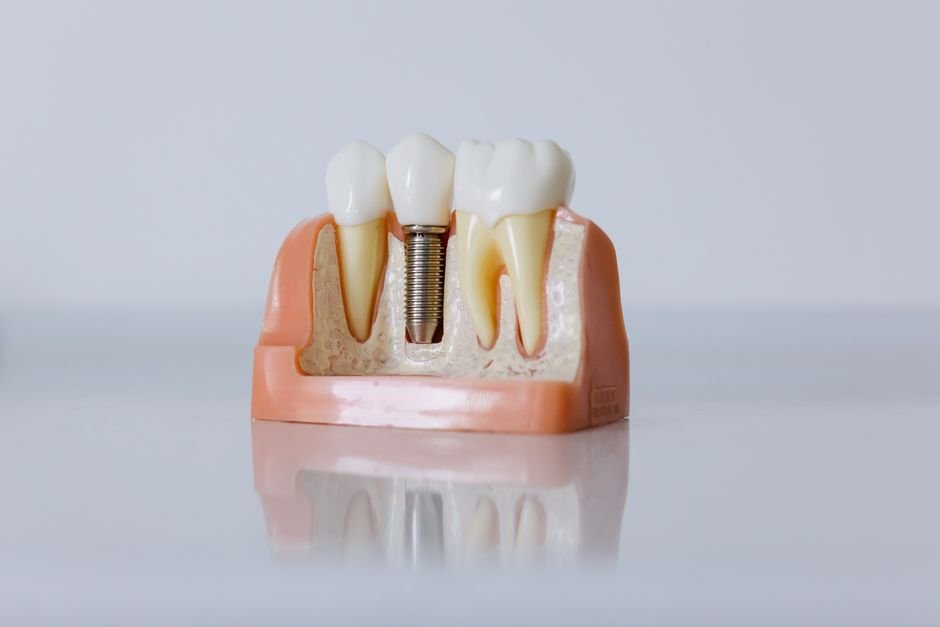
A dental implant replaces the entire tooth structure, including the root, by placing a small titanium post into the jawbone that fuses with the bone over several months. Once healed, a custom crown is attached to the post, creating a replacement that functions and feels very similar to a natural tooth.
Because implants replace the root as well as the visible tooth, they also help maintain jawbone density in the area, which can otherwise gradually shrink after tooth loss. This makes implants a strong long-term option, though they do require adequate bone volume and a healing period before the final crown can be placed.
What Does a Fixed Bridge Involve?
A fixed bridge replaces a missing tooth by anchoring a replacement tooth to the teeth on either side of the gap, which are shaped and fitted with crowns to support the structure in between. Unlike an implant, a bridge does not involve any surgery, and once placed, it does not need to be removed for cleaning.
The main consideration with a bridge is that it relies on the health and strength of the neighbouring teeth, which need to be reduced in size to accept the supporting crowns. This makes a bridge less suitable if those neighbouring teeth are already compromised, since it places additional functional demand on them.
When Is a Removable Partial Denture the Better Fit?
A removable partial denture replaces one or more missing teeth with a prosthetic that clips onto the surrounding natural teeth and can be taken out for cleaning. It is generally the least invasive and least expensive of the three options, making it a practical choice for people who are not candidates for implants or bridges, or who prefer a non-surgical solution.
The trade-off is that partial dentures typically do not feel as stable or natural as a fixed option, and they require consistent daily cleaning and care to avoid irritation or odour. For some people, particularly those replacing multiple teeth across different areas of the mouth, this flexibility outweighs the downsides.
How Does Jawbone Health Influence the Decision?
Sufficient jawbone density is necessary to support a dental implant, since the post needs enough surrounding bone to fuse with securely. Bone loss, which often begins soon after a tooth is lost, can make implants more difficult without additional procedures such as bone grafting to rebuild the area first.
Bridges and partial dentures do not have the same bone requirement, since they rely on the surrounding teeth or gum tissue for support rather than fusing directly with the jaw. This is one reason bone health, assessed through imaging, plays such a significant role in narrowing down which options are realistically available.
How Do These Options Compare in Cost and Longevity?
Implants typically involve a higher upfront cost due to the surgical placement and healing process, but they often last decades with proper care, making the long-term cost comparison more favourable than it initially appears. Bridges generally cost less upfront but may need replacement after ten to fifteen years, particularly if the supporting teeth develop issues.
Partial dentures usually have the lowest upfront cost but the shortest typical lifespan, often needing adjustment or replacement as the mouth changes shape over time. Weighing cost against expected lifespan, rather than upfront price alone, gives a more accurate picture of the total investment involved in each option.
What Does the Timeline Look Like for Each Option?
A partial denture can often be fitted within a few weeks of the initial consultation, making it the fastest of the three options to complete. A fixed bridge typically takes a few appointments over several weeks, allowing time for the supporting teeth to be prepared and the bridge to be custom-made.
Implants involve the longest timeline, often spanning several months from placement to final crown, since the post needs time to fuse securely with the jawbone before it can safely support a crown. This extended timeline is a trade-off many patients accept in exchange for the implant’s durability and natural feel.
How Should Someone Decide Between These Options?
The starting point for any decision is a thorough dental evaluation, including imaging, to assess bone health, the condition of neighbouring teeth, and any broader factors like gum disease that could affect the outcome. From there, a dentist can explain which options are realistically suitable, rather than presenting every option as equally viable.
Personal factors matter too, including budget, willingness to undergo a longer treatment timeline or minor surgery, and preference for a fixed versus removable solution. A good replacement plan balances what is clinically appropriate with what fits a person’s actual lifestyle and priorities.
What Happens If Tooth Replacement Is Delayed Too Long?
The longer a missing tooth goes unaddressed, the more the surrounding teeth and bone tend to change, which can narrow the range of options available later. Significant bone loss, for example, may require grafting before an implant becomes possible, adding time and cost to a process that could have been simpler earlier on.
This does not mean every delay leads to serious complications, but it does mean that earlier evaluation generally preserves more choice. Even if someone is not ready to commit to a specific treatment, an early consultation helps establish a clear picture of how much time there realistically is to decide.
How Does Replacing Multiple Missing Teeth Change the Approach?
When several teeth are missing, the calculation shifts. Multiple implants, an implant-supported bridge, or a larger partial denture may be considered depending on how many teeth are involved and where they sit in the mouth. Replacing several teeth individually with separate implants can become costly, which often makes a combined approach more practical.
In more extensive cases, a full or partial denture supported by a small number of implants can offer a middle ground between the stability of implants and the lower cost of a removable option. A dentist can map out which combination makes the most sense based on the specific pattern of tooth loss involved.
Frequently Asked Questions
Is a dental implant always the best option?
Implants are often the most durable option, but they are not automatically the best choice for everyone. Bone health, budget, and personal preference all factor into whether an implant, bridge, or partial denture is the better fit.
Can a missing tooth be left unreplaced without consequences?
Leaving a gap unaddressed can lead to shifting of neighbouring teeth, changes in bite, and gradual bone loss in the area. These changes tend to develop gradually rather than immediately, but they are worth discussing with a dentist.
How long do dental bridges typically last?
Bridges commonly last ten to fifteen years with good care, though this can vary depending on the health of the supporting teeth and how well the bridge is maintained through daily cleaning.
Do removable partial dentures feel natural?
They generally feel less natural than a fixed option like a bridge or implant, since they can be removed and rely on clasps for stability. Many people adjust to them well, though the sensation differs from a natural tooth.
What determines whether someone is a candidate for an implant?
Adequate jawbone density, healthy gums, and general oral health are the main factors. A dental evaluation with imaging is needed to confirm candidacy, and some patients may need bone grafting first if density is insufficient.
Disclaimer: This article is for informational purposes only and does not constitute medical or dental advice. Always consult a qualified dental professional before making any decisions about your oral health or treatment options.